Production scheduling
A live schedule can change the sequence of work when a machine stops or a rush order arrives.

AI for manufacturing helps teams use production information to plan work, investigate problems and automate routine tasks. Paloma is the operations management platform that connects factory records in one warehouse you own and writes down planners' and operators' rules. We build schedules and shift reports on both, so your team can see what is running and what comes next.
Book a call →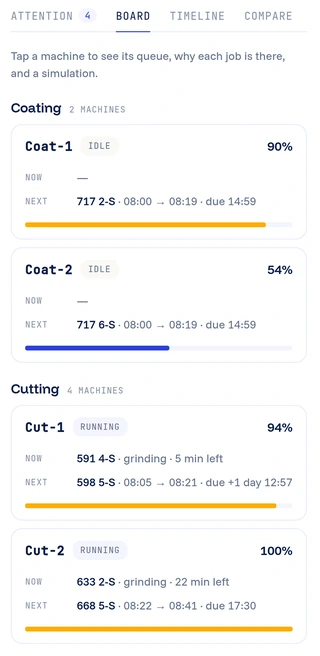




Paloma connects production records with the explanations that planners and operators use to make sense of them.
The ERP may contain the order, while a planner keeps the working schedule in a spreadsheet. Operators know why a sequence changed or which exception needs attention.
We learn these details from your people and connect the sources in a data warehouse your company owns. A production question can then use both the records and the rules behind them. The same foundation supports tools for the factory team, including a machine board that shows what is running and what comes next.
A live schedule can change the sequence of work when a machine stops or a rush order arrives.
A morning report reaches the team in WhatsApp before the shift, using the latest connected operating records.
Paloma reads orders from email or spreadsheets and enters the corresponding ERP records after your team approves it.
The machine board shows the queue, status and load at each work center.
Planners and operators can see what is running and which work comes next. Paloma can also build a live schedule that changes the sequence when a machine stops or a rush order arrives. Our engineers learn the rules and exceptions that govern the work before building the tool.
“Between wasted logistics spend and time lost to reporting, we didn’t know how much money was walking out the door every month.”
Our engineers learn how your factory operates before building tools for its staff.
We discuss the actual sequence of work, the records people use and the exceptions they handle. Those details become part of the system’s understanding of the business.
As the tools enter daily use, staff can keep adding definitions and knowledge. Regular reviews help identify further improvements, while training gives people a better understanding of what AI could do. Paloma continues to investigate the operation and build around useful findings, whether the next need is a report, an agent or another internal tool.
AI can support planning, reporting and routine administration using production and order records. Paloma’s applications include machine boards, live scheduling, shift reports and order entry. We work with the factory team to understand which job needs improvement and what information a useful tool would need.
Yes. Paloma can build a live schedule that changes the sequence of work when a machine goes down or a rush order arrives. The machine board shows queues, status and load. Your team helps explain the production rules that the tool needs to follow.
Yes. Staff can ask questions through WhatsApp, and reports can reach the team before a shift. Desktop reports and dashboards provide other ways to use the same operational information. The choice depends on the job and how people need to receive or examine the result.
No. Paloma connects with the existing systems and information used by your staff. We build tools alongside current work, beginning with read-only access. The factory team validates the output before adopting the new tool, so its checks are part of implementation.
Our engineers work with your people to learn the terminology, working practices and exceptions involved. We establish those rules in the system, and staff can keep teaching it as they work. Paloma asks them to review new assumptions before using them as business knowledge.
Paloma builds alongside your existing systems. During the pilot, we use read-only access and produce reports or exports for your staff to check.
Your team continues its usual work while we prepare the tool. They validate the output before adopting it, and actions that change records require their approval.
We sign an NDA and document access permissions before accessing your data. Your IT team reviews the access framework, and the pilot uses read-only access.
Paloma runs on dedicated infrastructure with encryption in transit and at rest. Model providers operate under zero-retention enterprise agreements that prevent them from retaining your data or using it for training.
Paloma delivers working tools within weeks. The schedule for your work depends on the sources we need to connect and the process your staff need to validate.
Speedrun is a separate one-week programme. It combines AI training, a review of the operation, an adoption roadmap and a first working tool.
Onboarding once, then a monthly subscription that grows with the work Paloma takes on. You pay for the responsibility taken on as the system keeps running and we keep improving it with you. The Speedrun week is one fixed price. Numbers on the call.
You can book a call while you are still deciding where AI could help. No technical brief or selected task is required.
The call is free and takes 30 minutes. We listen to how your operation works, discuss your questions and consider whether Paloma fits the help you need.
A schedule that needs rebuilding when a machine stops, or a shift report someone assembles each morning. We can talk through either in a free, 30 minute call.
Book a call →