Cost investigations
Paloma examines shipment records and invoices to show which changes contributed to higher logistics costs.

A supply chain consultant helps a business improve how goods, information and decisions move through its operation. That can involve diagnosing delays, reviewing costs and implementing changes. Paloma is the operations management platform that maps work with your team, connects records in one warehouse you own, records rules and builds tools. The system keeps running, and we keep improving it with you.
Book a call →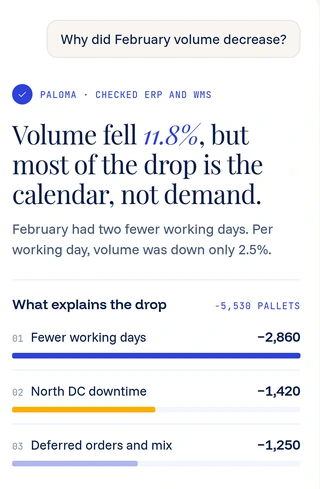




Paloma connects the records behind a supply chain problem so your team can understand what caused it.
An ERP order shows what was bought or sold. A carrier invoice shows a charge. A message may explain why the shipment needed different handling. Each tells only part of the story.
We connect these sources and learn the definitions your people use when reviewing performance. Your team can then ask why a cost changed and inspect the evidence behind the answer. That shared information also supports the reports and tools we build to help them manage the work.
Paloma examines shipment records and invoices to show which changes contributed to higher logistics costs.
A delivery watchlist shows routes and live indicators, with regions needing attention flagged for the team.
Paloma reads order requests from emails or spreadsheets and creates ERP orders after your team approves that action.
Paloma shows which shipment records and charges explain a change in logistics costs.
For example, a higher monthly bill can include increased freight rates and more urgent shipments. Paloma separates the contributing changes and shows the calculation. Your team can review those sources, understand the increase and create a recurring report to follow the same costs in later months.
“Between wasted logistics spend and time lost to reporting, we didn’t know how much money was walking out the door every month.”
Paloma combines operational investigation with engineers who build the tools your team needs to act on the findings.
The work continues after a finding has been explained. We can turn a recurring investigation into a scheduled report, add an alert for a rising cost or build a tool around a manual process.
Regular reviews keep that work connected to your priorities. Your staff explain what has changed, and we discuss which improvement should come next. The same company records and definitions support each build, so procurement and logistics can use knowledge that another team has already explained.
A supply chain consultant examines how goods and information move through a business and helps improve performance. The scope can include planning, procurement, inventory, manufacturing and logistics. Paloma focuses on understanding the operation, connecting its information and building software that helps people improve their daily work.
Yes. Paloma can connect shipment records, carrier invoices and your cost definitions to investigate an increase. The answer shows the sources and calculation. Your team can examine the contributing charges and use the analysis as the basis for a recurring logistics report.
Yes. Paloma builds reports, dashboards, agents and internal tools around operational needs. The investigation helps establish what the tool should do. Our engineers then work with staff to develop it and check the output before the team adopts it in daily operations.
Your team continues to direct the operation. Paloma connects records, investigates problems and builds software, while staff contribute their knowledge and validate new tools. That combination helps people use the information they already hold and reduce recurring manual work.
Paloma combines operational investigation with connected data and software that teams use day to day. A broader consulting engagement may also cover network design, organizational structure or sourcing strategy. The useful comparison is the scope you need and who will deliver each part of it.
Paloma builds alongside your existing systems. During the pilot, we use read-only access and produce reports or exports for your staff to check.
Your team continues its usual work while we prepare the tool. They validate the output before adopting it, and actions that change records require their approval.
We sign an NDA and document access permissions before accessing your data. Your IT team reviews the access framework, and the pilot uses read-only access.
Paloma runs on dedicated infrastructure with encryption in transit and at rest. Model providers operate under zero-retention enterprise agreements that prevent them from retaining your data or using it for training.
Paloma delivers working tools within weeks. The schedule for your work depends on the sources we need to connect and the process your staff need to validate.
Speedrun is a separate one-week programme. It combines AI training, a review of the operation, an adoption roadmap and a first working tool.
Onboarding once, then a monthly subscription that grows with the work Paloma takes on. You pay for the responsibility taken on as the system keeps running and we keep improving it with you. The Speedrun week is one fixed price. Numbers on the call.
You can book a call while you are still deciding where AI could help. No technical brief or selected task is required.
The call is free and takes 30 minutes. We listen to how your operation works, discuss your questions and consider whether Paloma fits the help you need.
A freight bill went up, or purchasing and logistics still pass records between them by hand. We can explore where to start in a free, 30 minute call.
Book a call →